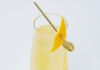

In the current April 2014 issue of Bar Business Magazine (available in digital form here), Elyse Glickman tells us how the latest trend in wine cocktails can provide bar owners a new channel to improve wine sales on-premise. While she gave you all the background and expert insight in here article, below she provides some amazing recipes to get started with. Check it out:
Noon Summers, mixologist at MokSa in Cambridge, MA, has incorporated several wine cocktails on the MokSa drink list in response to customer demand, especially during the hot summer months. Though her resume includes menus for Battery Park, Sweet Caroline’s, Swish Shabu, Bijou, Canastero and NE EJ Gallo Moscato, her being a Certified Sommelier with the International Sommelier Guild gives her an edge on the subject as do her credentials as a Certified Wine and Spirits Specialist with the Society of Wine Educators, Certified Sake Professional with the Sake Education council, French Wine Scholar with the French Wine Society and a BarSmarts certified Mixologist.
If you’re new to wine cocktails, however, follow the lead of H. Joseph Ehrmann to opt for wines with strong flavors or physical characteristics. The lighter the flavor and body of a wine, the more difficult it is to use as a foundation because just about anything you add to it will dominate it. Aromatized and fortified wines, meanwhile, are a significant part of Louro mixologist Subbarao’s arsenal. Adding a range of different vermouth producers to the mix as well as styles like Cocchi Rosa, Barolo Chinato, Pineau de Charentes,
Madeira, Sherry and Muscat Beaumes-de-Venise, among others. Combine these with the range of possible vermouth-amaro combinations and you have room for literally hundreds of successful new recipes.
Benjamin Newby, a Chicago-based consultant who has won numerous international mixology awards and operated notable event and venues in the UK, Ibiza and Chicago, notes that although he’s been associated with top spirit brands, he loves cocktails that assume the formats of sangria and punch.
“It is the subtlety of the different varietals and the effect they have on the cocktail that are interesting for flavor and mouth feel,” details Newby. “Using some red wines can create an interesting tannin texture when mixed with liquor, while whites bring a certain brightness. In fall and winter, I am more inclined to use the reds in a spiced mulled wine and also slightly more obscure types such as mead (honey wine) and port. For the coming summer and spring, I am working on a delightful punch/sangria which will use Pinot Grigio, Nolet’s Gin and peaches.”
Bravas’ Lilley says several of his recipes have a foundation of saffron-citrus-infused Brandy, Torres Orange Liqueur and fresh orange juice. In summer, he might use peaches, strawberries or melon and in the fall and winter, opt for persimmon or smoked apple. “You really can’t make it wrong…as long as you don’t make it too sweet,” Lilley advises. “Or just pour some Cava on the top and wait for the tickets to stop rolling out of the printer.”
Lilley recommends a dry Spanish red like Garnacha for the red sangrias. For White Sangria, he likes a Verdejo or Albarino. Txakolina, a sweet white wine from Rioja, works nice, too, as it has the mild effervescence which gives it so much character. Cava sangria, meanwhile, is just that, and therefore one should be careful to avoid Cava that’s too sweet or acidic. For more experienced or adventurous bartenders, Rose and small amounts of Sherry can lend themselves to interesting flavor profiles.
“I feel like a proper drink should be bright and refreshing and make you want to have another one,” says Lilley. “These lighter wine-based spirits allow the guest to be able to enjoy more than one drink without feeling like they can’t go anywhere from there. We have sometimes end up with one of those ‘good problems to have,’ putting a drink on in the summer and it will become so popular that we can’t take it off the menu. In cases like this, seasonal ingredients can easily be changed to compliment the base spirit and ensure that the drink still sells without seeming like it is out of context.”
Dallas’ Boxwood Tap + Grill’s pitcher offerings include their Red Sangria, with Grenache wine, sparkling wine, lemon and orange juices and grenadine. Their White Sangria includes Sauvignon Blanc, Absolut Citron, apple liqueur, and white cranberry juice. At Quaker Steak & Lube, Malaniak notes Pinot Grigio makes a nice base for dry white cocktails while Moscato is ideal for sweeter flavor profiles in spritzers. Their best-selling Purple Crush ‘Gria has a Cabernet base. Jeremy Strawn’s favorite sangria foundations include Cabernet, Malbec, Bordeaux and White Bordeaux, because of their body and spice, and ability to stand up to a number of ingredients. He also likes Dolin Bianco Vermouth because of its Port-like qualities.
“Have fun with them just as long as you take care to be sure their flavor profiles and viscosity work with everything else you are putting into the cocktail recipe,” Strawn advises. “The other ingredients should highlight with what makes that wine special.”
WINE COCKTAIL RECIPES:
Sloe Gin Movement
Jon Lilley, Bravas Bar de Tapas, Healdsburg, CA
1 oz Spirit Works Sloe Gin
1 oz Lemon Juice
1/2 oz Orange Juice
1/2 oz Agave Syrup
4 drops Toasted Orange Tincture
Sparkling Wine
Combine Sloe Gin, Citrus, Agave and Tincture in pint glass. Add ice, shake and double strain over fresh ice in a bucket glass. Top with Sparkling Wine. Garnish with large orange peel.
Bravas’ Sangria
Jon Lilley, Bravas Bar de Tapas, Healdsburg, CA
1 oz Citrus-Saffron infused Brandy
1/2 oz Torres Orange Liqueur
1 oz Fresh Orange Juice
Roughly 3oz of Dry Red or White wine, or Cava
Combine Brandy, Orange Liqueur and Orange juice in large tumbler or wine glass. Add ice and stir. Top with Red, White or Cava. Garnish with freshly sliced seasonal fruit.
Citrus-Saffron Brandy
Bravas Bar de Tapas, Healdsburg, CA
Peels of 5 Grapefruit Peels or 5 Oranges
1 Large pinch of Saffron
Sliced seasonal fruit (peaches, strawberry, persimmon, etc.)
3 L Brandy
Peel grapefruit and orange and add saffron and fruit of choice to large, neutral container. Add Brandy and leave for a minimum of 48 hours. Mixture can be strained, bottled and kept, basically, forever (but hopefully the party ends before that).
Poached Pear
Shawn Vergara, Blackbird, San Francisco, CA
1 oz pear-infused dry gin oz honey syrup
1/2 oz lemon juice
Shake and strain into champ glass top with Lambusco.
Strozzarsi (“To choke”)
Matt Grippo, Blackbird, San Francisco, CA
2 oz Tio Pepe Fino Sherry
1 oz Cynar
1/2 oz Rothman and Winters Apricot Liqueur
Build cocktail in mixing glass, stir with ice, strain into anisette rinsed snifter
Basquiat
Blackbird, San Francisco
1 oz Tariquet Rose fortified with Averna (1.25 oz wine .25 Averna)
1 oz Tariquet VS Classique Armagnac (Tariquet Blanche Armagnac)
Build in Mixing glass/stir/strain into rocks glass over large rocks, garnish with lemon twist.
Strawberry Peach Bellini
Martini
Bar Louie, New York City
1 oz Skyy Wild Strawberry Vodka
Peach Funkin White Peach Puree
2 oz La Marca Prosecco
1/2 oz Pure Cane Syrup
Three raspberries for a floating garnish
Combine the vodka and the peach puree. Shake and strain into a glass. Fill to top with the Prosecco. Garnish with the berries and peach wedge.
Black Hat
Jeff Lyon, The Third Rail, San Francisco
1 oz Eagle Rare 10 bourbon
1 oz Carpano Antica oz Nocino della Cristina
Dash Angostura bitters
Dash Bitter Truth Jerry Thomas bitters
Stir-serve in a coupe–garnish with a flamed orange peel.
Spotlight
Jeff Lyons, The Third Rail, San Francisco, CA
2 oz La Bodega Hidalgo Manzanilla sherry
1/2 oz St. George pear eau de vie
1/2 oz Canton ginger liqueur
2 dashes Bitter Truth celery bitters
Stir. Serve in an old fashioned glass on one big cube.
Apricot Pop
ESquared Hospitality, New York, NY
1 oz St Germain Elderflower
2 oz Apricot Puree
4 oz Sparkling Wine
3 dashes of orange bitters
Build cocktail in mixing glass by adding St. Germain, apricot puree, and bitters. Shake with ice and strain into champagne flute. Add sparkling wine.
Liquid Gold
BLT Steak, New York, NY
1/2 oz Stolichnaya
1/2 oz of maple cardamom syrup
4 oz dry sauvignon blanc oz Belvoir Elderflower Cordial
Combine vodka, maple syrup, and elderflower cordial and shake for 10 seconds. Pour into a champagne flute and top with dry sauvignon blanc. Garnish with a flamed lemon peel.
The following are submitted by Matthew Biancaniello, Riviera 31, Los Angeles, CA. Biancaniello’s note: While the Monte Carlo is a special creation for Riviera 31, the “Pavan Sparkling and “Classic Aperol Cocktail” are from their general Aperitif menu, as these never go out of style.
Monte Carlo
In a champagne flute combine sparkling wine, Aperol liqueur and fresh blood orange puree in equal parts.
Pavan Sparkling
Pavan french liqueur
sparkling water
orange twist
Classic Aperol Cocktail
Aperol
sparkling wine
lemon twist
The following wine specialties are from Colin Hall of Moonrise Concepts for Boxwood Tap & Grill, Dallas, TX:
Watermelon Cooler
Muddle three to four 1 inch square chunks of watermelon, 1/2 oz simple syrup, 1/2 oz lemon juice and top with your favorite Prosecco or sparkling wine.
Prosecco Mojito
Muddle three lime wedges, one mint sprig, 1/2 oz simple syrup, one ounce of Cana Brava rum. Add ice and shake with a shaker tin. Strain into a wine glass with ice and top with Prosecco.
BTG White Sangria
Muddle lemon and lime wedges with 1/2 oz apple liquor, 1 oz Absolut Citron and 1/2 oz simple syrup. Shake ingredients with ice and strain into a wine glass with ice. Add a white wine with a fair amount of acidity like a Sauvignon Blanc or Pinot Grigio. Top with cranberry juice and citrus for garnish.
The following submitted by Scott Watson, Urban Farmer Steakhouse, Portland, OR:
Feast of Love
Pour 1 oz Clear Creek cranberry liqueur into a glass. Top with champagne and garnish with lemon twist!
Follow My Lips
Pour 1 oz Calisaya liqueur into a glass. Top with Prosecco and garnish with a dash Angostura bitters.
THE FINAL TOUCH: The Summer of “75”
At Restaurant R’evolution in New Orleans, the tried-and-true French 75 is a customer-customized affair, prepared with Armagnac and finished with a customer’s choice of luxury Champagne:
* Taittinger, Comtes de Champagne, Blanc de Blanc Brut, Reims 2004 ($36)
* Dom Perignon, Vintage, Hautvillers 2000 ($31)
* Nicolas Maillart, Marie Hanze, Brut Elegance, Montagne de Reims NV ($17)
“We wanted to focus on the fact that we’re using real Champagne,” says R’evolution mixologist Molly Wismeier. “While other forms of sparkling wine have been used in this recipe, the cocktail was originally made to spotlight real Champagne. One of the things we’re trying to do at Revolution is recall the earlier era of the great restaurants, as it started here New Orleans. Classic champagne beverages are part of that tradition, so what we’re doing here is finding a creative way to showcase them here.”
Wismeier notes another popular cocktail, the Belle Epoque, echoes the theme and décor scheme of the restaurant highlighting fine Creole cuisine as well as exhibit Champagne’s versatility.
“The cocktail features a fine bourbon topped off with Champagne and a touch of lemon,” she says. “Originally developed it when our restaurant opened to be a “revolutionary spin” on the original French 75—instead of doing it with brandy or gin, I used bourbon.”